Nineteen homes finished, under construction or in permitting, spread across five cities. They are all Dallas–Fort Worth and they do not build the same. Here is what we have learned about each one.
Fort Worth — 76104, near downtown
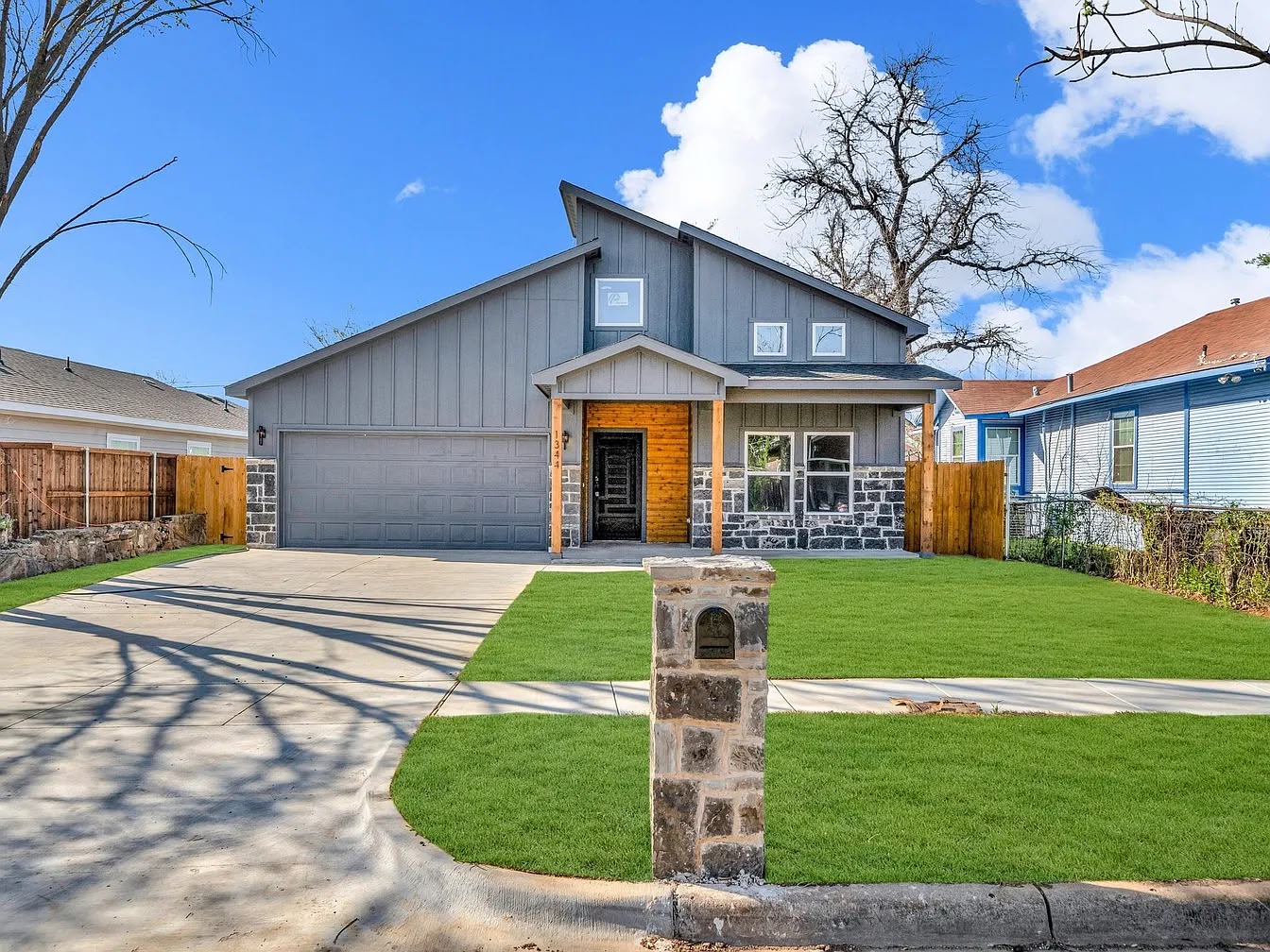
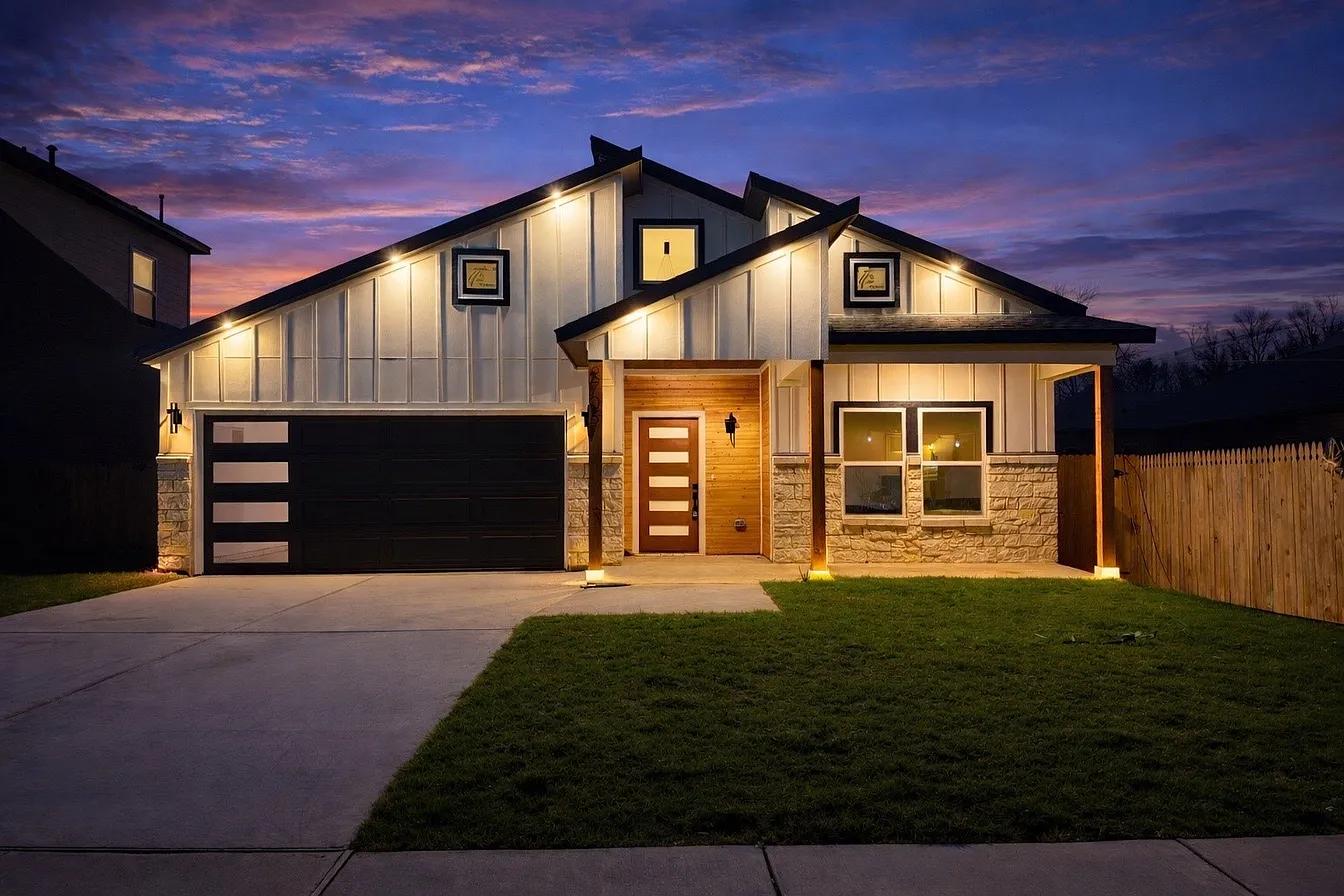
This is where most of our completed work sits: S Jones Street, E Allen Avenue, E Jefferson Avenue, and E Cannon coming next. It is close-in, it is walkable to downtown, and the streets have been there for the better part of a century.
What building here is actually like: the lots are narrow, which makes the setback math the first thing we check. Utilities are old, and what is in the ground is not always what the records say. Many blocks have alleys, some of which are in good shape and some of which a concrete truck will not get down. There is frequently something on the lot that has to come off first.
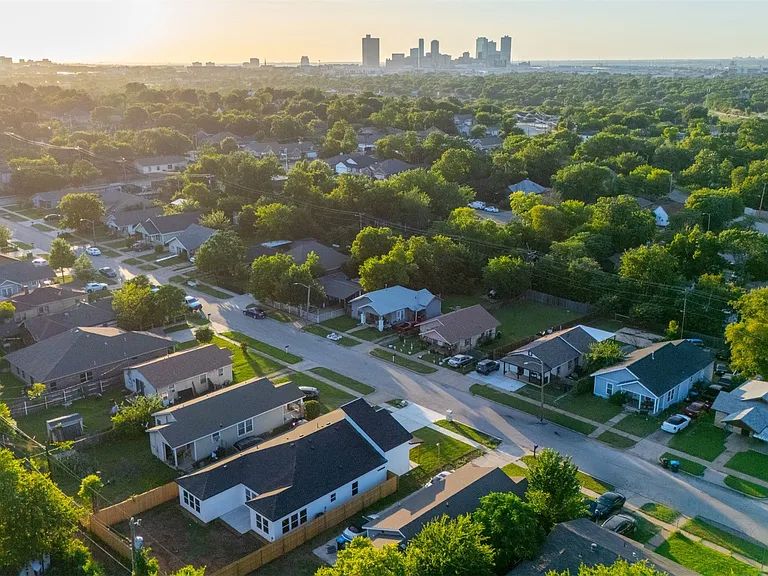
What you get in return is a house minutes from downtown on a street with grown trees and a mix of houses from every decade. Our aerial photo above is this neighborhood — you can see the skyline from the block.
Fort Worth — 76111, Riverside and the Rayner blocks
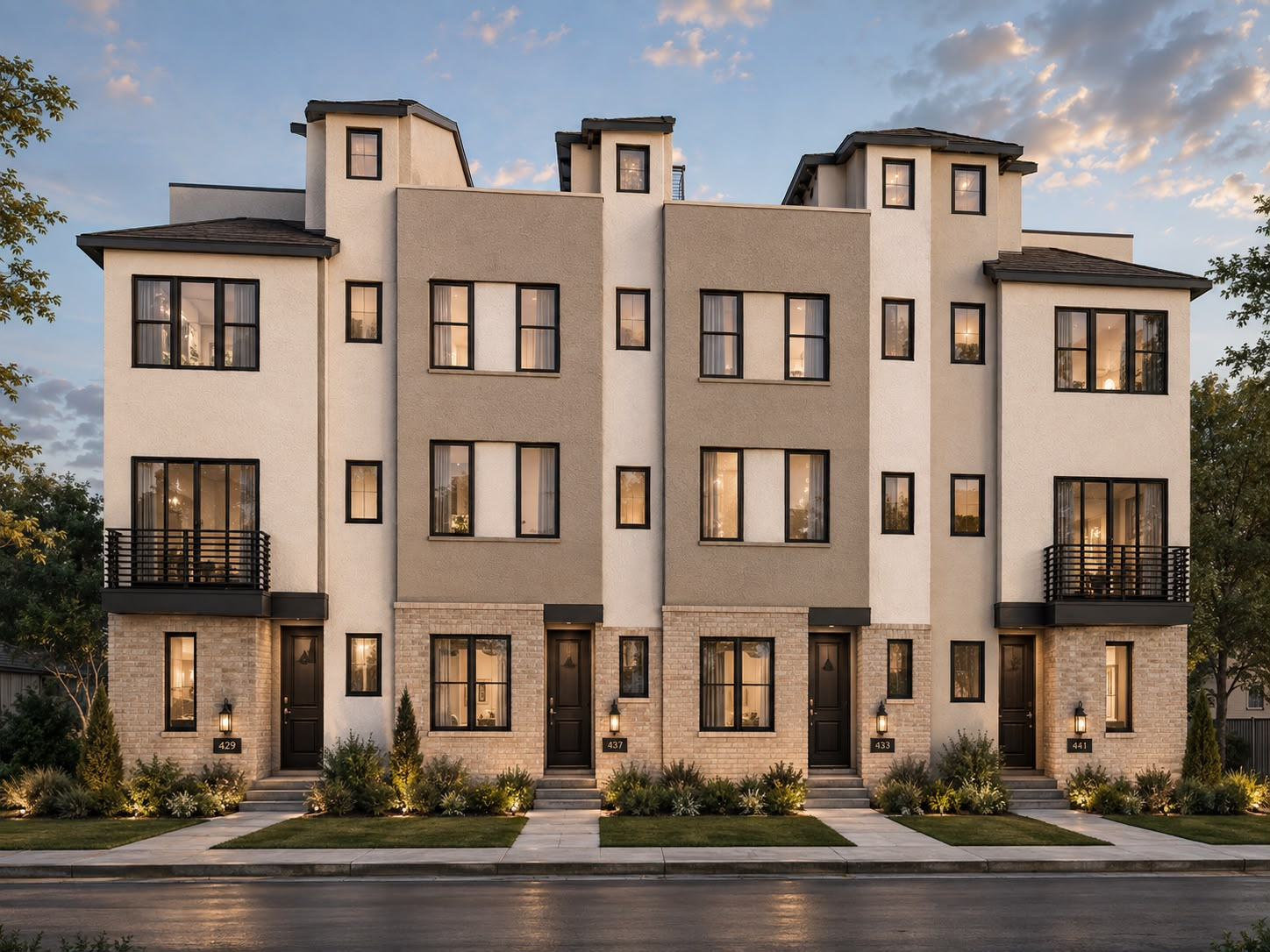
Northeast of downtown, across the river. We have four houses going up together right now at 429, 433, 437 and 441 Rayner Avenue — three-story, stucco and brick, black steel windows.
Building four on one block changes how the work runs. One crew stays put instead of moving between sites, one material order covers all four elevations, and the same person walks every house every morning. The block also gets to finish as a block: streetscape, grading and landscaping planned together rather than four houses negotiating with each other after the fact. Nothing gets a different standard because nothing is far enough away to drift.
Fort Worth — 76105, Walker Street
Southeast Fort Worth, and another place where we have built two next to each other — 3008 and 3012 Walker. Similar lessons to the Rayner blocks at smaller scale, and a good demonstration of what a pair of new houses does to a street's momentum.
White Settlement
Just west of Fort Worth, its own city with its own permitting. We have two finished on Donald Street. Lots tend to be a little more generous than close-in Fort Worth, the process is smaller and more direct, and it is a genuinely under-appreciated part of the metroplex for anyone who wants a new house without a close-in price.
One practical note: every city out here runs its own review. Fort Worth, White Settlement, Arlington and Sherman each have their own portal, their own submittal requirements and their own timeline. A builder who works across several of them keeps track of that so you do not have to.
Arlington
Our house at 2416 Jewell Drive is west Arlington — a two-story great room with a blackened steel fireplace running full height between white oak slat walls, and a kitchen built around a waterfall quartz island. 6000 Waterview Drive is going up now: natural limestone veneer, warm cream brick, cedar-stained siding on the upper balcony, dark bronze windows.
Arlington sits in the middle of the metroplex, which is its whole argument — you are roughly equidistant from both downtowns, with UTA, the entertainment district and good school options in range. Lots here run larger than close-in Fort Worth, which allows a wider house and a real yard.
Dallas — northwest
Two on the boards for 2027: 3749 Durango Drive and 7807 Robin Road, both in northwest Dallas near Love Field. Different market, different price band, and a permitting process with more steps than Fort Worth's.
These are established, mature neighborhoods where new construction slots in between houses that have been there for decades. That is a design problem as much as a construction one — the house has to be new without being a stranger on the block.
Sherman
An hour north of Dallas in Grayson County, and the outlier on this list. We have two lots on Heritage Knoll Drive in permitting for 2027.
Sherman is growing on the back of significant industrial investment in the area, and it is one of the few places within reach of the metroplex where land still costs what land used to cost. For a buyer who wants square footage and a lot rather than a fifteen-minute commute, the math up there is genuinely different.
What is consistent everywhere
The city changes. The soil is North Texas clay in all of them, which means the same conversation about site preparation, drainage and foundation design happens on every lot regardless of the ZIP code. The trades are largely the same people. And the standard does not move — the reason we build in clusters where we can is that it is easier to hold one standard when nothing is far enough away to drift.
If your lot is not on this list
It probably still works. We serve the metroplex broadly, and the honest constraint is drive time from our other active sites, because daily supervision is not something we are willing to give up.
Send us an address and we will tell you straight whether we are the right builder for it. Start there.